guides
Smart film in Saudi Arabia, a specifier's guide
How switchable film actually behaves in Saudi conditions, what it costs, where it beats blinds and tint, and where it does not.
Why this guide exists
Most of what is written about smart film is written to sell it. This guide is written to help you specify it, which means being clear about the cases where a cheaper product will serve you better.
How it actually works
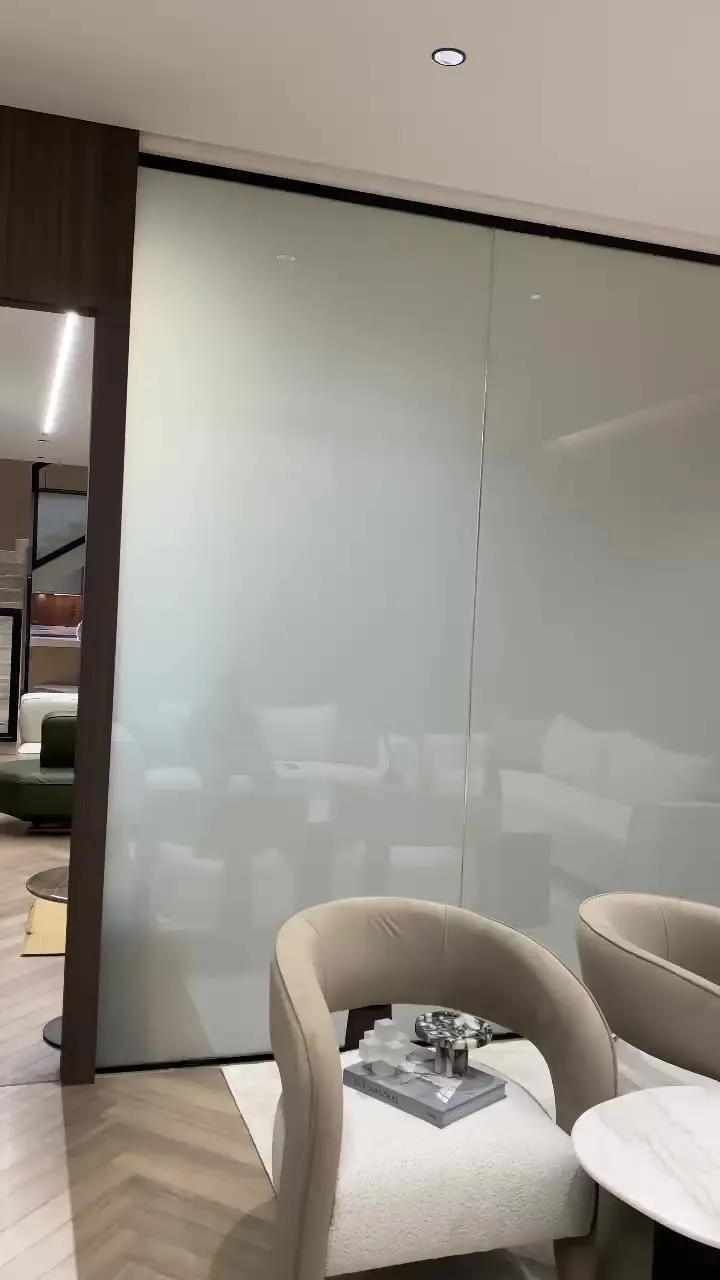
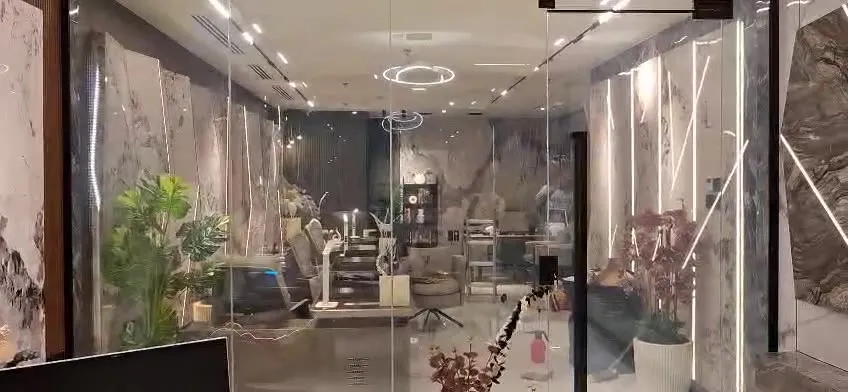
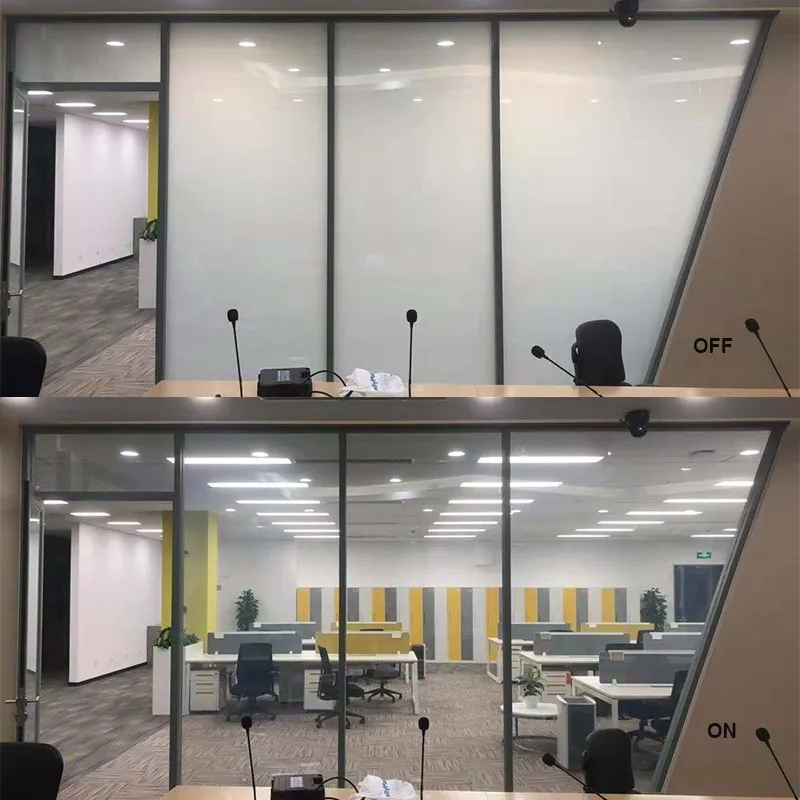
A switchable film contains liquid crystals suspended in a polymer layer. With no voltage applied, the crystals sit at random angles, scatter incoming light, and the glass reads as frosted. Apply voltage and they align, light passes straight through, and the glass turns clear.
Two consequences follow from that, and both matter when you specify.
First, the default state is private. Lose power and the glass goes opaque, not clear. For a bathroom or a consultation room that is the safe failure mode. For a corridor that relies on borrowed light, it is worth thinking about.
Second, the film is doing optical work, not thermal work. It scatters visible light. It is not, by itself, a meaningful barrier to solar heat.
What that means in Saudi conditions
The single most common specification mistake in the Gulf is treating switchable film as a heat solution. On a west-facing Riyadh elevation in July, privacy is rarely the binding constraint: solar gain is. Switchable film will not fix that.
The right move on a hot elevation is usually a layered specification: a spectrally selective solar film handling the heat, with switchable film added only where privacy is genuinely required. That costs more than one product, and less than the wrong product installed twice.
On internal glazing, which is where most switchable film in the Kingdom ends up, none of this applies and the product is a straightforward win.
Cost, and what actually drives it
Area is the obvious driver, but it is rarely the one that surprises people on a quotation. Three others matter more than clients expect.
Zoning drives cost. Every independently switched area needs its own circuit and its own control. A single large partition switched as one zone is considerably cheaper per square metre than the same area split into four.
Edge detail drives cost. The film has to terminate somewhere, and the neatness of that termination is most of what separates a good install from an obvious one. Frameless glass needs more care, and more care costs more.
Control integration drives cost. A wall switch is trivial. App control is straightforward. Integration into an existing building management system is a different conversation and should be scoped before, not after, the order.
Comparing honestly against the alternatives
Against blinds, switchable film wins on cleaning, on the clean look of a frameless partition, and on the fact that nothing hangs in the space. Blinds win decisively on upfront cost, and they need no electrician.
Against fixed tint, switchable film wins whenever the requirement changes through the day. Fixed tint wins on heat, on cost, and on the fact that there is nothing to fail.
Against a solid wall, switchable film wins on daylight, which is usually the whole reason the glass is there.
Specifying well
Ask for the switching time, the haze figure in the clear state, the power draw per square metre, and the warranty terms in writing. Ask what happens at the edges. Ask who owns the control integration.
Then ask the supplier where they would not use their own product. If they cannot answer that, you are talking to a sales team rather than a specifier.
Frequently asked questions
Does smart film reduce cooling load?
Only marginally on its own. It is a privacy product, not primarily a thermal one. If cooling load is the brief, pair it with a solar control layer or specify a spectrally selective film instead.
How long does smart film last in Gulf conditions?
On internal glazing, a well-made film should give a long service life. On external glazing exposed to direct sun, UV load is the limiting factor, which is why the interlayer and the edge seal matter more than the headline price.
Can it be installed on curved glass?
Gentle curves are usually workable. Tight radii are not, and that needs to be checked on site before anything is ordered.